Part 1: Shanti’s Story
“He should be walking by now.”
Maybe it was just a delay. Maybe it was nothing. Or maybe, deep down, a mother already knew.
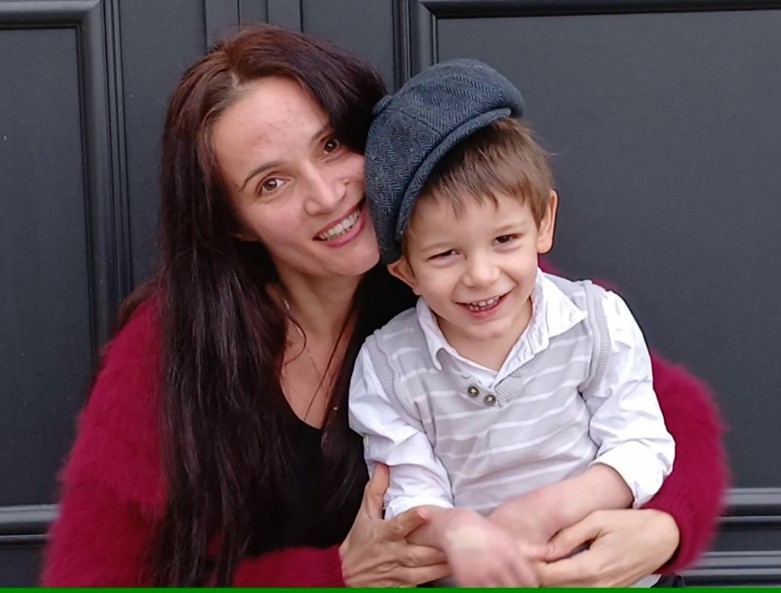
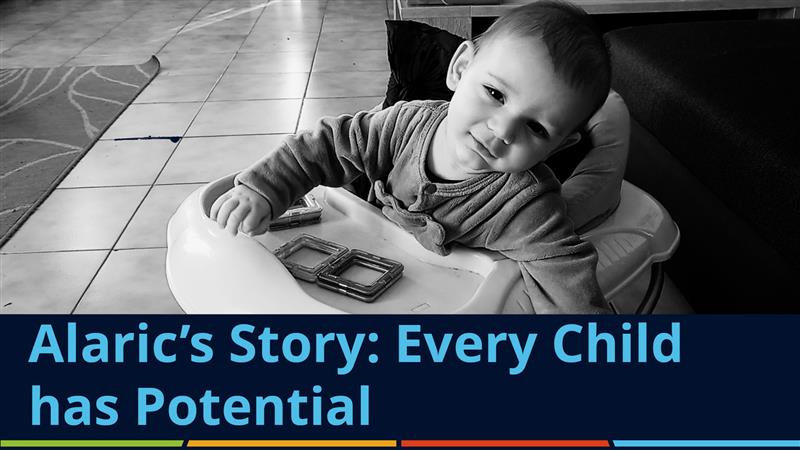
When Alaric was born, a few seconds of oxygen deprivation left a devastating imprint on his brain. No one could predict how far the damage would go. Whether he would walk, talk, sit, eat, or even laugh like other children. But everyone had an opinion. Chairs, belts, and devices—tools designed to stabilise, support, or substitute- were presented as solutions.
They told us it was helpful. At first, we believed them.
A wheelchair was moulded to Alaric’s body, and we nicknamed the walker “the motorcycle” to make it fun. These tools promised mobility, but they didn’t deliver freedom. They offered the illusion of progress while teaching his body not to try.
Strapped into his moulded chair, he didn’t need core strength or balance. His muscles stayed asleep. And as long as he could be wheeled from point A to point B, what was the point of learning to move?
We didn’t question it, at least not right away. We were exhausted, had other children, and were surviving; it was easier to trust the experts.
But deep down, something ached.
By the time Alaric was three years old, he still hadn’t moved. He simply sat, slouched on the sofa, staring blankly at the television. We were told not to expect much. To accept things as they were.
Then, Helen Doron, a dear friend of my parents, heard about Alaric. She video-called me and asked to see Aleric as she had heard he was physically disabled. She immediately noticed that he was mentally challenged, too. As someone who never stopped believing in children, she recommended a special programme. We started the programme, and for the first time, we felt hope.
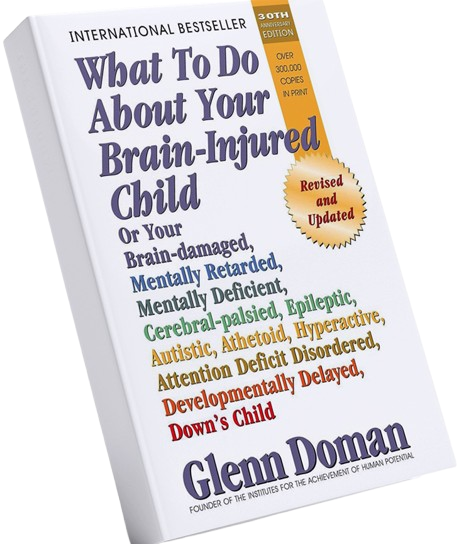
She pointed us to The Institutes for the Achievement of Human Potential and the groundbreaking work of Glenn Doman, who spent over 60 years developing a method to support children with brain injuries, as well as advance well children with special methodologies.
We learned that crawling, real, purposeful crawling, wasn’t just a milestone. It was a neurological necessity. Crawling on the stomach wires the brain. It builds pathways for coordination, focus, speech, and higher learning.
Who is Glenn Doman?
Glenn Doman was a pioneering American physical therapist and founder of The Institutes for the Achievement of Human Potential (IAHP).
His internationally renowned programme, What to Do About Your Brain-Injured Child, focuses on early neurological stimulation through movement, patterning, and structured training to rewire the brain. His methods are based on the core belief that the brain grows by use, and that no diagnosis should define a child’s potential.
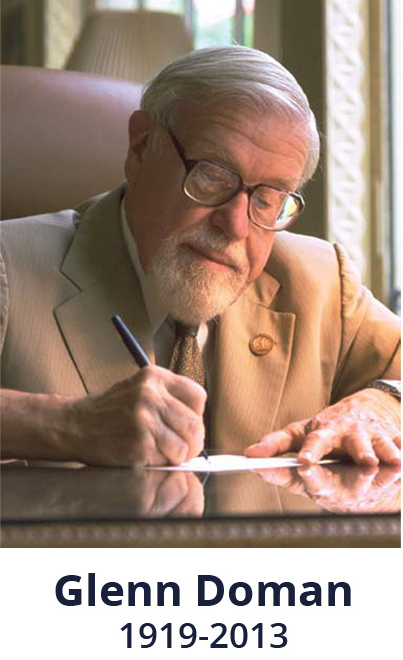
We set a goal: 330 metres of crawling per day. It sounded impossible. At first, Alaric barely managed ten. He cried. He resisted. We cried, too. But then, something shifted.
He began to realise crawling wasn’t punishment or a chore, but a superpower. When he crawled, he could reach a toy. When he pushed, he could get to the door. One day, he realised that he had to sit in the chair himself if he wanted to eat.
And he did.
We changed everything for him. We changed everything for us.
We built obstacle courses, tracking every metre. We built a corridor circuit and gave him small motivational targets: a storybook here, a snack over there, a favourite toy just out of reach. The house became a training ground. The routine became our life.
Even Alaric’s grandmother moved in to help. We’re not therapists or doctors. We’re a mother, a father, a grandmother: a family refusing to give up. We work from home. We homeschool our daughters. We live in a house under renovation. And every day, we train with Alaric.
Training is a 24/7 family effort. It takes everything and everyone we have. And it gives us more than we imagined.
One week, Alaric managed 50 metres. Then 120. Then 250. His legs began to coordinate. His eyes lit up. He smiled more.
He still doesn’t talk. He still doesn’t walk. But he is finally moving. And with each metre, we reclaim a piece of hope.
They told us not to expect miracles. But every time Alaric pushes himself forward, we see one.
And this is just the beginning of Alaric’s journey,
To any parent who feels overwhelmed, defeated, or told “this is just how it is”, please hear this:
It’s not too late.
Yes, the earlier you start, the better the results. But wherever you are in your journey, progress is possible. Sometimes, the slightest forward movement is the start of true, hard-won freedom.
Part 2: Every Child Deserves a Chance
At Helen Doron English, we believe in every child.
That belief is at the heart of our mission: to unlock each child’s potential through innovative, joyful, and science-based learning.
Alaric’s story is not about language. It’s about possibility. About the extraordinary things that can happen when you stop accepting limits and start building pathways.
Glenn Doman’s work revolutionised our understanding of the brain. He proved that the brain can rewire itself with consistent, purposeful stimulation, especially through movement. His insights laid the foundation for the methodologies we use at Helen Doron.
Why Crawling and Cross-Patterning Matter
Cross-patterning is a physical movement technique where the left arm and right leg, and then the right arm and left leg, move in coordinated alternation, as seen in crawling or walking.
This motion stimulates communication between the brain’s two hemispheres, helping to build connections across the corpus callosum, the bridge of nerve fibres that links both sides.
When children cross their body’s midline during movement, they train the brain to send messages from one lobe to the other—a critical process for learning, speech, reading, emotional regulation, and coordination. Skipping this stage, or rushing past crawling, can leave developmental gaps in these areas.
Crawling, cross-patterning, and climbing aren’t just physical milestones.
They are the neurological foundation of attention, memory, motor skills, and eventually, language.
That’s why we don’t ask children to sit still in our lessons. At Helen Doron, we build learning through movement. Inspired by Glenn Doman, Helen Doron developed a unique approach to language learning that emphasises rhythm, joyful repetition, and, most importantly, full-body engagement. Our learners crawl, clap, dance, skip, bounce, and sing. Through these movements, they wire their brains for lifelong learning.
The earlier the start, the more profound the impact. In those formative early years, the brain is at its most plastic and eager to learn.
Whether a child is learning to walk, speak, or read, the principle is the same: Every child can learn with the proper support and the right tools.
Alaric may never study English with us yet (then again, who knows 😊), but his story embodies the heart of our mission:
- That hope is powerful.
- That progress is possible.
- That every step (or crawl) matters.
Because sometimes, all it takes is one determined crawl to begin the journey.
Read more in our “Early Learning Series”