Mind map explanation
The Mind Map is a tool invented by Tony Buzan for consolidating ideas and how the brain builds and connects them. Even Leonardo Da Vinci used mapping to chart his ideas! This MathRiders Junior Mind Map gives a holistic view of the elements that make up an actual MathRiders lesson.
Brain jogs (all ages)
Brain Jogs are quick and fun energizing activities that prepare a learner for thinking and coordination skills. Each activity uses movements that cross the midline and connects both brain hemispheres. When the brain hemispheres are connected, the student is able to use right brain creativity and left brain logic simultaneously. It is being proven more and more that an approach which integrates these two different activities of the brain leads to far more effective learning. Brain Jogs bring movement and learning together.
Musical activities: (younger ages)
The children do fun mathematical activities with percussion instruments in order to strengthen mental arithmetic abilities, inventive thinking and group dynamics, as well as non-verbal individual participation.
Hands on: (all ages)
Learning is dynamic for MathRiders Junior students. Students explore and investigate maths through age and developmentally appropriate hands-on activities and games. These include, interlocking cubes, measuring each other’s height using a non-conventional standard of measure (bricks, books or other objects) building a clock, colouring, comparing items, and many different ways to see mathematics in action. Once the hands-on activity has been done, it is time to express it in mathematical terms.
Self-expression: (all ages)
The child expresses himself as an individual as well as part of a group. During the core part of the lesson in which the child examines mathematical problems in a concrete, hands-on manner, he is encouraged to verbally express what he has discovered and to improve his manner of expression. His views and thoughts are respected and thus help build his self-esteem, legitimize his thoughts and strengthen his belief in himself. This, in turn, increases his motivational level, which, in turn, generates success. He verbally expresses the hands-on mathematical activity the group has just done, and together with the teacher, he and the group learn to transform this to ‘real world’ activity into a mathematical exercise on paper.
Written activities: (all ages)
All students, from Levels 1 through 6 have written workbook activities that mirror the lesson activity. The children work in unique workbooks in order to establish and strengthen their abilities and understanding of the numerals as opposed to verbal/mental arithmetic. The teacher is able to confirm that lessons and concepts are absorbed by each student. These written activities balance the lesson; in combining written activities with movement and play, knowledge is retained longer and students successfully learn maths. As the levels progress, students are challenged and receive lots of positive reinforcement to succeed.
Songs and stories
In levels 1 and 2, lessons contain songs relating to counting to help the child remember the basics of maths. Lessons for Levels 1 – 4 often end with a story that: depicts the life of a great mathematician, tells an aspect of the history of maths, or relates to mathematical concepts.
In this way, the child connects to the emotional side of the subject and is able to reflect on yet another facet of the world of mathematics.
Mind map explanation
The Mind Map is a tool invented by Tony Buzan for consolidating ideas and how the brain builds and connects them. Even Leonardo Da Vinci used mapping to chart his ideas! This MathRiders Junior Mind Map gives a holistic view of the elements that make up an actual MathRiders lesson.
Brain jogs (all ages)
Brain Jogs are quick and fun energizing activities that prepare a learner for thinking and coordination skills. Each activity uses movements that cross the midline and connects both brain hemispheres. When the brain hemispheres are connected, the student is able to use right brain creativity and left brain logic simultaneously. It is being proven more and more that an approach which integrates these two different activities of the brain leads to far more effective learning. Brain Jogs bring movement and learning together.
Musical activities: (younger ages)
The children do fun mathematical activities with percussion instruments in order to strengthen mental arithmetic abilities, inventive thinking and group dynamics, as well as non-verbal individual participation.
Hands on: (all ages)
Learning is dynamic for MathRiders Junior students. Students explore and investigate maths through age and developmentally appropriate hands-on activities and games. These include, interlocking cubes, measuring each other’s height using a non-conventional standard of measure (bricks, books or other objects) building a clock, colouring, comparing items, and many different ways to see mathematics in action. Once the hands-on activity has been done, it is time to express it in mathematical terms.
Self-expression: (all ages)
The child expresses himself as an individual as well as part of a group. During the core part of the lesson in which the child examines mathematical problems in a concrete, hands-on manner, he is encouraged to verbally express what he has discovered and to improve his manner of expression. His views and thoughts are respected and thus help build his self-esteem, legitimize his thoughts and strengthen his belief in himself. This, in turn, increases his motivational level, which, in turn, generates success. He verbally expresses the hands-on mathematical activity the group has just done, and together with the teacher, he and the group learn to transform this to ‘real world’ activity into a mathematical exercise on paper.
Written activities: (all ages)
All students, from Levels 1 through 6 have written workbook activities that mirror the lesson activity. The children work in unique workbooks in order to establish and strengthen their abilities and understanding of the numerals as opposed to verbal/mental arithmetic. The teacher is able to confirm that lessons and concepts are absorbed by each student. These written activities balance the lesson; in combining written activities with movement and play, knowledge is retained longer and students successfully learn maths. As the levels progress, students are challenged and receive lots of positive reinforcement to succeed.
Songs and stories
In levels 1 and 2, lessons contain songs relating to counting to help the child remember the basics of maths. Lessons for Levels 1 – 4 often end with a story that: depicts the life of a great mathematician, tells an aspect of the history of maths, or relates to mathematical concepts.
In this way, the child connects to the emotional side of the subject and is able to reflect on yet another facet of the world of mathematics.
Home » MathRiders Starter
Ages 3-5
Children are Born Mathematicians!
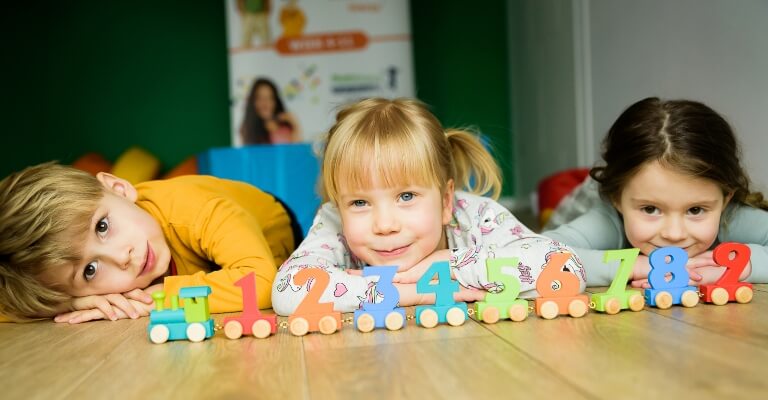
MathRiders’ youngest learners experience maths through the world around them. Small classes, a warm, nurturing environment and fun learning experiences give children ages 3-5 the perfect interactive introduction to maths!
Maths through play
Play is the child’s main tool for comprehending, analysing and processing information and knowledge of the world around them. Through play, MathRiders builds a solid maths foundation allowing children to practise, research and refine their skills of what they are beginning to understand. Learning through play gives a child a sense of ‘ownership’ of ideas and therefore, promotes self-esteem.
Maths through movement and music
Music and rhythm provide children with opportunities to explore foundational concepts such as matching, comparison, patterns, sequencing, counting, position, space, etc. They facilitate maths learning by focusing attention, supporting the children’s emotional development and refining their understanding of mathematical concepts.
Self-expression and leadership
Each child is encouraged to express himself as an individual, as well as part of a group. This expression helps build self-esteem which increases motivation and generates success.
Establishing a lasting foundation
The mathematical knowledge that children gain before they begin school can have a significant influence on future performance.

Advantages for Your Child

Logical thinking and problem-solving skills

Symbolic and
spatial thinking

Social competences
and independence

Social competences
and independence

Fine motor skills development

Fine motor skills development

Memory training

Improved attention and concentration
Mathematical Concepts Learned

Number Sense &Operations

Algebraic Thinking

Measurement

Geometry

Handling Data
Courses
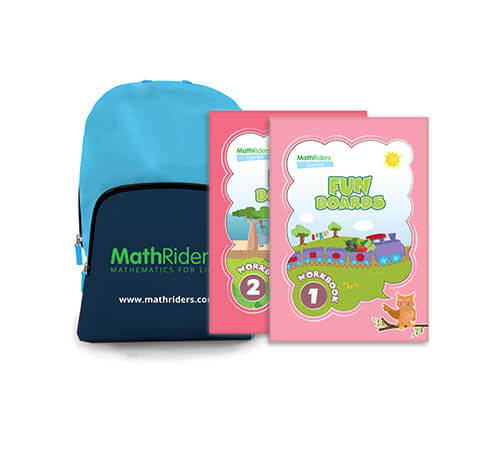
Fun Boards
Age 3 to 4 Years
It’s never too early to start learning Maths!
With the Fun Boards course, kids will begin to become familiar with maths through exploring the world around them.
The journey begins with exciting activities such as: counting toys, building with blocks, playing musical instruments, and more!

Student Age
3 to 4 Years

Number of Lessons
40 lessons

Lesson Length
30-45 minutes
Learning Materials
Backpack
2 Workbooks
Helen Doron Stream
Topics
- Whole numbers and counting to 10
- Concepts of addition and subtraction
- Recognition of 2D shapes, modelling them with components
- Concepts of measurement and comparison
- Sorting objects into two given categories, understanding patterns
Learning Materials
Backpack
2 Workbooks
Helen Doron Stream
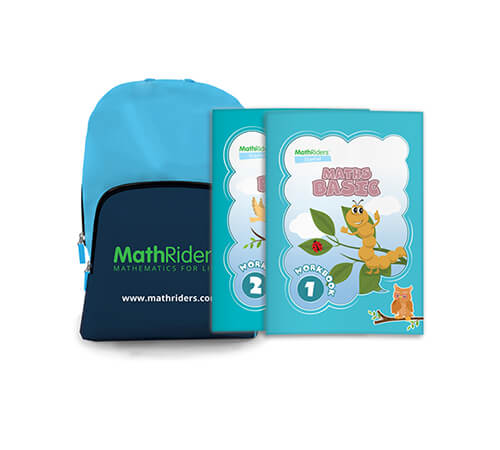
Basic
Age 4 to 5 Years
A joyful way to learn the very basics of maths! With the Maths Basic course, kids will explore the world around them through games and maths concepts: draw and sing numbers, count musical beats, measure objects, design shapes and more.

Student Age
4 to 5 Years

Number of Lessons
40 lessons

Lesson Length
30-45 minutes
Learning Materials
Backpack
2 Workbooks
Helen Doron Stream
Topics
- Counting, ordering, comparing and writing numbers to 10
- Addition and subtraction within 10
- Recognition of 2D and 3D shapes in real-life objects
- Concepts of length, weight, temperature, capacity, time and money
- Sorting objects into several given categories, reproducing and creating patterns
Learning Materials
Backpack
2 Workbooks
Helen Doron Stream