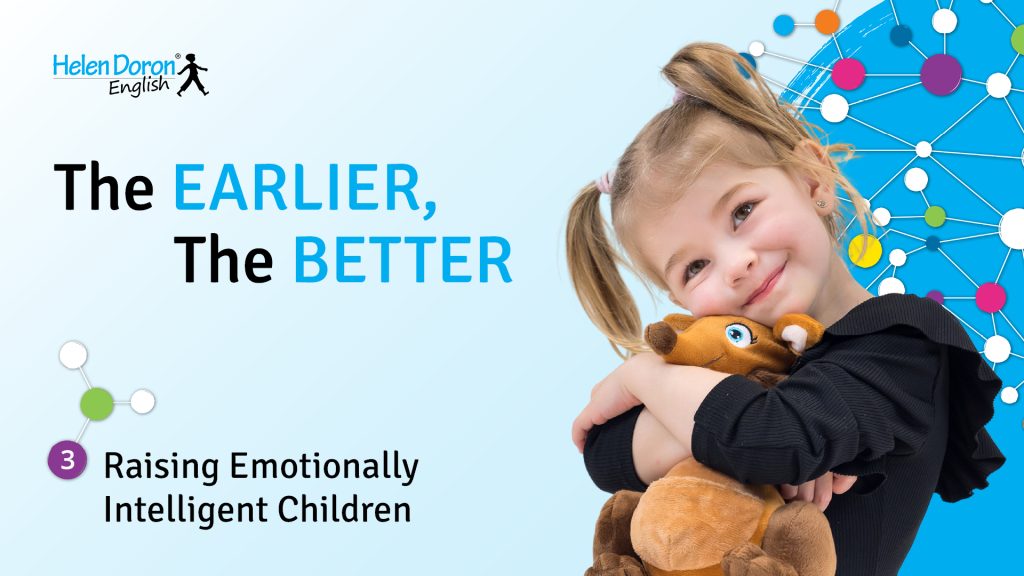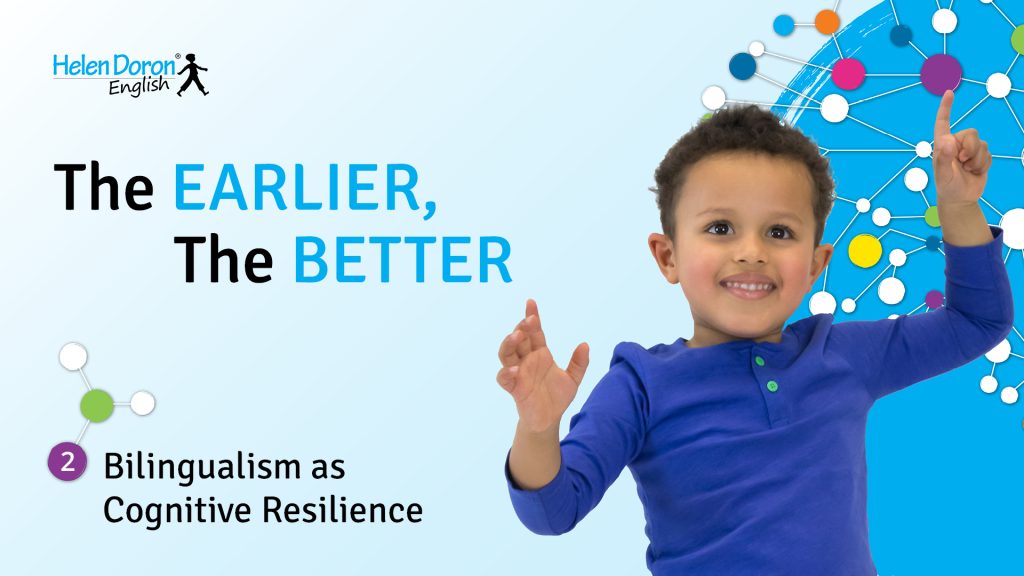

Picture this: You’re cradling your baby, and they look up with wide, curious eyes. You coo, “mama”, and they echo it back. It’s a heart-melting moment, but behind it, millions of brain connections are firing, shaping how your child will learn, think, and speak for years.
These first 3 years are a once-in-a-lifetime window of opportunity. Your child’s brain is laying down the roads for language, and every chat, song, or silly game
helps decide which ones get paved and strengthened.
Let’s look at how that works, and what you can do, starting today.
Why the First Three Years Matter—Especially for Bilingualism
Neuroscience shows that before age three, your child’s brain is uniquely wired to learn more than one language with native-like fluency. This is because babies are born able to hear and distinguish every sound in every language, but by 6 months, their brains start pruning unused sound pathways.
Children regularly exposed to two languages from birth or toddlerhood build what researchers call “dual language maps,” naturally strengthening grammar, vocabulary, and pronunciation in both languages without confusion.
In fact, studies find that regular bilingual exposure by age three is the best predictor of long-term fluency, accurate accents, and strong literacy skills in both languages. Children who start later, from age 4 or 5, often develop fluency but are more likely to speak with an accent or struggle with grammar. Early bilinguals
also show cognitive benefits by age two, like better focus, memory, and problem-solving.
So, when we say the first three years are a golden window, we mean it. Every lullaby, every silly rhyme, every bilingual picture book is paving brain highways that will shape your child’s learning for life. The earlier, the better.
Still, while starting in the first three years offers the deepest foundation, children can benefit significantly from second language exposure at any age, as the brain remains open and adaptable.
How Babies Tune In: The Science of Sound Maps
In the first year, your baby’s brain is like a city under construction. Roads go in all directions, but only the busy ones get reinforced.
As mentioned above, babies hear the sounds from any language from birth to 6 months as equal. But by six months, their brains start tuning in to only the languages they hear regularly. The rest slowly fade away.
This process is called neural tuning, and it’s one reason babies who hear rich, consistent language tend to have stronger vocabularies by age two.
Even simple phrases like “Let’s clap hands!” or “Where’s your teddy?” help the brain decide which sound paths to keep. The more your baby hears, the more precise the map becomes.
Back-and-Forth Talk Builds Brain Power
Talking with your baby is even more powerful than talking at them. Scientists call this “serve and return”. Much like a game of tennis, where your child responds with a coo, smile, or gesture, and you respond again.
This back-and-forth strengthens the brain’s wiring and builds myelination: the insulation that helps messages travel faster. A study from the Journal of Neuroscience found that toddlers who experienced more of these interactions had stronger brain insulation by 30 months, no matter their background.
So, when you spot a dog on a walk, point and say, “What’s that?” Pause. Let your baby react. Then say, “It’s a dog! Woof!” Or even better, say the type of dog, as in ”It’s a Dalmatian! Woof!” Each tiny exchange builds attention, memory, and language.
The Bilingual Advantage
If your child is exposed to two languages early on, it’s like expanding their brain’s highway system. Instead of one two-lane road, they develop extra routes that boost flexibility, focus, and problem-solving.
Children exposed regularly to a second language before age 3 had better working memory and cognitive control than monolingual peers. Even small habits help. Sing a song in two languages, read the same storybook twice, or label toys with both names. Your child will learn to switch between “dog” and
“chien” (French for “dog”) with ease, flexing mental muscles every time.
Ready to Start?
At Helen Doron English, we turn everyday interactions into brain-building moments. Our classes are designed to feel like play but are rooted in powerful research and decades of experience.
Join a free trial parent-baby class near you. See how joyful, natural English learning can be.
Not quite ready? Subscribe to our newsletter for simple, science-backed tips you can try at home.
Start today, and give your little one the strongest start, one word at a time.
References
Adesope, O. O., Lavin, T., Thompson, T., & Ungerleider, C. (2010). A systematic review and meta‐analysis of the cognitive correlates of bilingualism. Review of Educational Research, 80(2), 207–245. https://doi.org/10.3102/0034654310368803
Archila-Suerte, P., Zevin, J., Ramos, A. I., & Hernandez, A. E. (2011). The influence of age of acquisition and proficiency on the neural processing of second language morphosyntax. Brain and Language, 119(1), 16–29. https://doi.org/10.1016/j.bandl.2011.03.003
Bialystok, E. (2017a). Second-language acquisition and bilingualism at an early age and the impact on early cognitive development (2nd ed.). Encyclopedia on Early Childhood Development. Retrieved from https://www.child-encyclopedia.com/
Bialystok, E. (2017b). The bilingual adaptation: How minds accommodate experience. Psychological Bulletin, 143(3), 233–262. https://doi.org/10.1037/bul0000099
Bialystok, E., Craik, F. I. M., & Luk, G. (2012). Bilingualism: Consequences for mind and brain. Trends in Cognitive Sciences, 16(4), 240–250. https://doi.org/10.1016/j.tics.2012.03.001
Byers-Heinlein, K., & Lew-Williams, C. (2013). Bilingualism in the early years: What the science says. Learning Landscapes, 7(1), 95–112.
Hamilton, R. H., Elsabbagh, M., & Johnson, M. H. (2022). Language exposure and brain myelination in early development. Trends in Cognitive Sciences, 26(10), 830–842. https://doi.org/10.1016/j.tics.2022.07.001
Jasinska, K. K., & Petitto, L. A. (2013). How age of bilingual exposure can change the neural systems for language in the developing brain. Frontiers in Psychology, 4, Article 283. https://doi.org/10.3389/fpsyg.2013.00283
Kovelman, I., Baker, S. A., & Petitto, L. A. (2008). Age of first bilingual language exposure as a new window into bilingual reading development. Bilingualism: Language and Cognition, 11(2), 203–223. https://doi.org/10.1017/S1366728908003386
Kuhl, P. K., Conboy, B. T., Coffey-Corina, S., Padden, D., Rivera-Gaxiola, M., & Nelson, T. (2008). Phonetic learning as a pathway to language: New data and native language magnet theory expanded (NLM-e). Philosophical Transactions of the Royal Society B: Biological Sciences, 363(1493), 979–1000. https://doi.org/10.1098/rstb.2007.2154
Kuhl, P. K., Conboy, B. T., Padden, D., Nelson, T., & Pruitt, J. (2010). Brain mechanisms in early language acquisition. Neuron, 67(5), 713–727. https://doi.org/10.1016/j.neuron.2010.08.038
Luk, G., De Sa, E., & Bialystok, E. (2011). Is there a relation between onset age of bilingualism and enhancement of cognitive control? Bilingualism: Language and Cognition, 14(4), 588–595. https://doi.org/10.1017/S1366728911000010
McCarthy, K. S., Mahon, E. A., Rosenberg, A. R., & Lombardi, S. M. (2014). Early immersion: A research-informed foundation for dual-language learners. Early Childhood Research Quarterly, 29(3), 410–418. https://doi.org/10.1016/j.ecresq.2014.04.005
Montanari, S., Simón-Cereijido, G., & Hartel, A. (2018). The impact of early dual-language learning on literacy development in English and Spanish. Applied Psycholinguistics, 39(3), 575–600. https://doi.org/10.1017/S0142716417000629
Poulin-Dubois, D., Blaye, A., Coutya, J., & Bialystok, E. (2011). The effects of bilingualism on toddlers’ executive functioning. Journal of Experimental Child Psychology, 108(3), 567–579. https://doi.org/10.1016/j.jecp.2010.10.009
Sebastián-Gallés, N., Echeverría, S., & Bosch, L. (2005). The influence of initial exposure on lexical representation: Comparing early and simultaneous bilinguals. Journal of Memory and Language, 52(2), 240–255. https://doi.org/10.1016/j.jml.2004.11.001